


Sauna Room Materials: Advantages and Disadvantages
The choice of materials is very important when manufacturing a sauna room. Good materials can improve heat resistance, durability, moisture resistance, safety, appearance, and overall user comfort.
1. Sauna Wood Materials
| Material | Advantages | Disadvantages | Common Applications |
|---|---|---|---|
| Hemlock | Fine grain, uniform color, low odor, low resin content, good dimensional stability, premium appearance | Moderate natural resistance to decay; more expensive than pine and spruce | Interior walls, ceiling, door frames, benches |
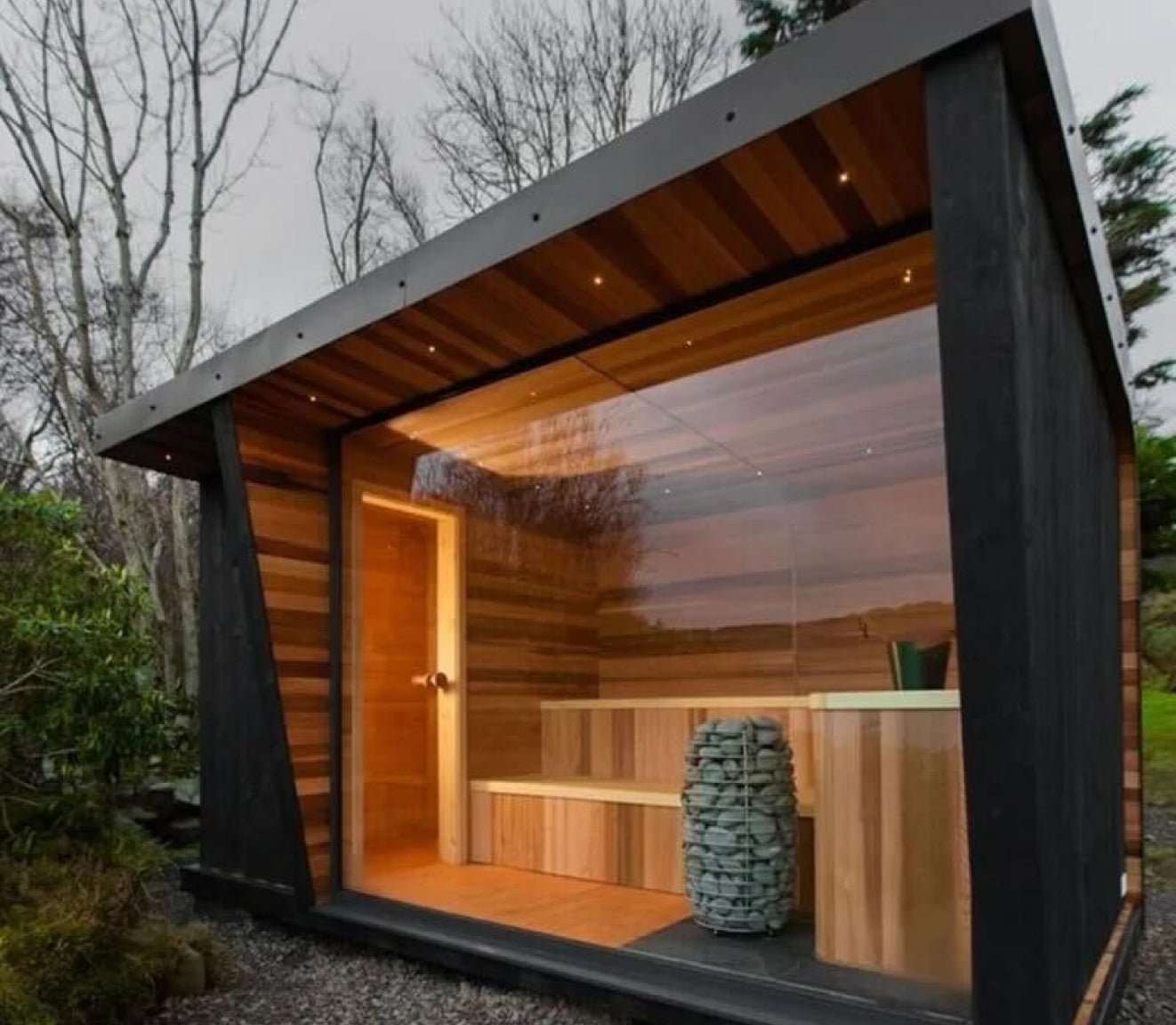
| Canadian Red Cedar | Excellent moisture and decay resistance, good dimensional stability, natural aroma, premium appearance | Relatively expensive; strong natural aroma may not suit every customer | Interior walls, exterior walls, benches |
| Aspen | Low thermal conductivity, comfortable to touch, low resin content, less likely to feel hot | Moderate strength and relatively high cost | Benches, backrests, interior walls |
| Nordic Spruce | Cost-effective, lightweight, attractive grain, easy to process | More knots and moderate resistance to moisture and decay | Interior walls, exterior walls, structural components |
| Pine | Low cost, widely available, easy to process | Higher resin content; resin may appear at high temperatures; visible knots | Exterior walls and structural components |
| Alder | Warm color, fine grain, good dimensional stability, attractive appearance | Relatively expensive | Interior walls and benches |
| Thermowood | Excellent dimensional stability, improved moisture resistance, low water absorption, attractive appearance | Higher cost and reduced toughness after heat treatment | Exterior walls, interior walls, flooring |
2. Sauna Insulation Materials
Rock Wool
Advantages:
- Excellent heat resistance
- Good thermal insulation
- Good fire resistance
- Long service life
- Cost-effective
Disadvantages:
- Requires appropriate protection during installation
- Moisture can reduce insulation performance
Glass Wool
Advantages:
- Lightweight
- Good thermal insulation
- Relatively low cost
Disadvantages:
- Requires proper protection during installation
- Requires good moisture protection and sealing
PIR/PUR Insulation Board
Advantages:
- Excellent thermal insulation
- Can provide high insulation performance with a thinner layer
- Lightweight
Disadvantages:
- Higher cost
- Must be selected specifically for the temperature conditions of the sauna environment
3. Aluminum Foil Vapor Barrier
An aluminum foil vapor barrier is commonly installed inside the sauna wall structure.
Advantages
- Helps prevent moisture vapor from entering the wall structure
- Improves overall insulation performance
- Helps protect the wooden structure
- Provides heat-reflective properties
Disadvantages
- Joints must be properly sealed
- Damage or gaps can reduce vapor barrier performance
A properly installed vapor barrier is particularly important for maintaining the long-term performance of a sauna room.
4. Sauna Glass
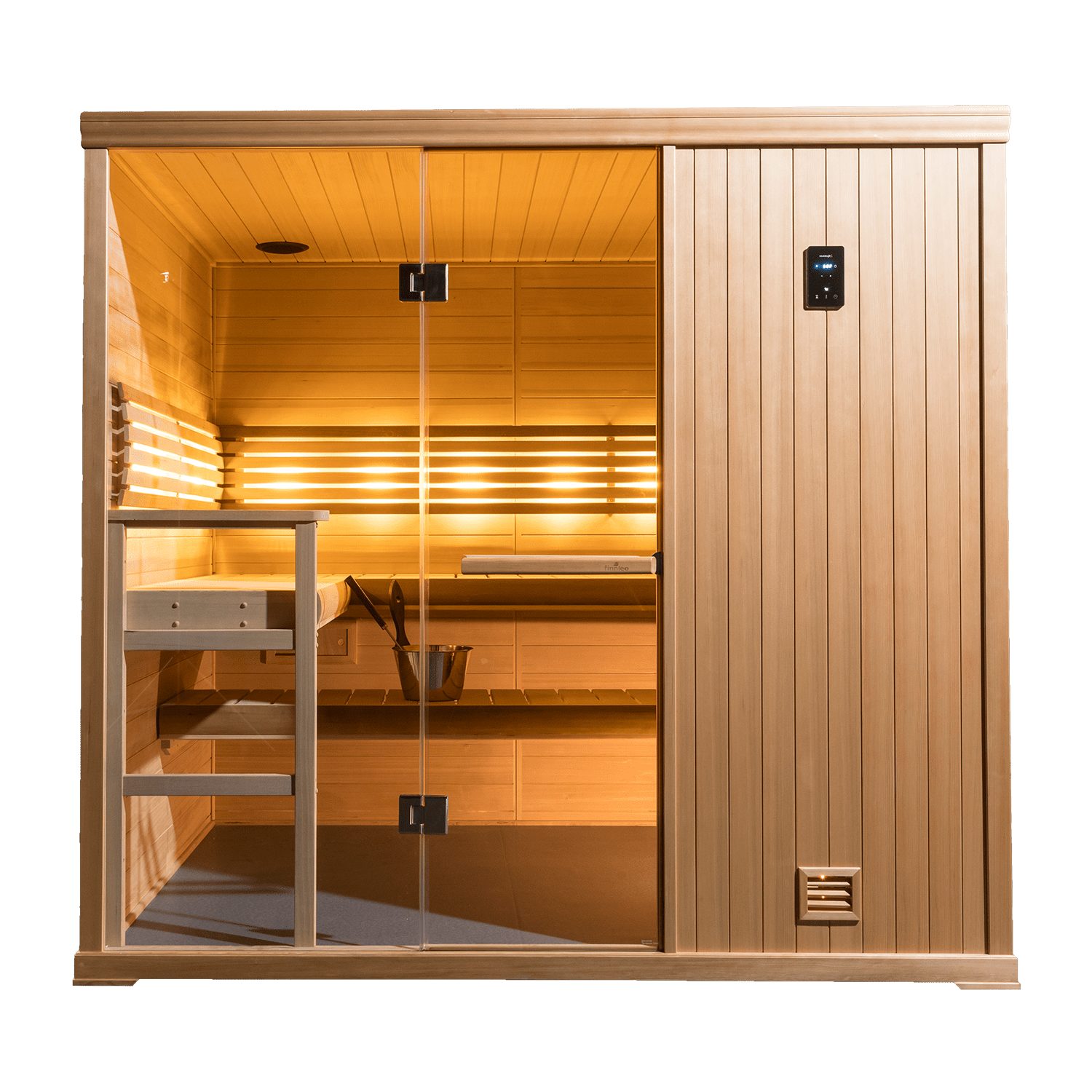
Tempered safety glass is commonly used for sauna doors and glass panels.
Advantages
- Good heat resistance
- High safety
- Excellent transparency
- Makes the sauna room feel more spacious
- Modern and premium appearance
Disadvantages
- More expensive than standard glass
- Relatively heavy
- Requires suitable door frames and hardware
Common sauna glass thicknesses are 8–10 mm, depending on the door design and structural requirements.
5. Sauna Flooring Materials
Anti-Slip Ceramic Tile
Advantages:
- Water resistant
- Heat resistant
- Easy to clean
- Long service life
- Good choice for wet environments
Disadvantages:
- Can feel cold underfoot
- Anti-slip performance must be considered carefully
Wooden Flooring
Advantages:
- Natural and attractive appearance
- Comfortable underfoot
- Matches the overall wooden sauna design
Disadvantages:
- Long-term exposure to moisture may cause deformation
- Requires good drainage, ventilation, and maintenance
6. Sauna Hardware
304 Stainless Steel hardware is recommended for sauna rooms.
Typical applications include:
- Door hinges
- Door handles
- Screws
- Connectors
- Decorative hardware
Advantages
- Excellent corrosion resistance
- Suitable for humid environments
- Long service life
- Premium appearance
Disadvantages
- Higher cost than ordinary steel hardware
7. Recommended Material Combinations
Economy Sauna
Spruce + Pine + Rock Wool + Tempered Glass
Suitable for price-sensitive markets and large-scale production.
Mid-Range Sauna
Hemlock + Spruce + Rock Wool + Aluminum Foil Vapor Barrier + Tempered Glass + 304 Stainless Steel
A good balance between cost, quality, appearance, and durability.
Premium Sauna
Canadian Red Cedar or Hemlock + Aspen Benches + High-Performance Insulation + Aluminum Foil Vapor Barrier + Tempered Glass + 304 Stainless Steel
Suitable for high-end residential saunas, hotels, gyms, spas, wellness centers, and commercial projects.
