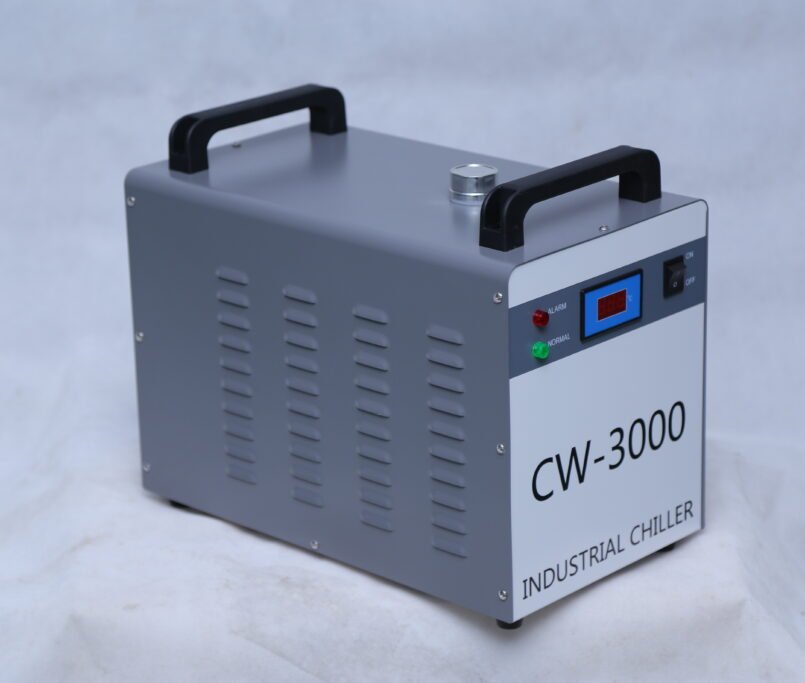




Causes of High-Temperature Protection in Industrial Water Chillers
Industrial water chillers are widely used for CNC machines, laser equipment, welding equipment, plastic processing, and other industrial applications. During operation, the chiller may occasionally enter high-temperature protection mode. This is a safety function designed to prevent damage to the refrigeration system and ensure stable operation.
Understanding the causes of high-temperature protection can help users quickly identify problems and reduce equipment downtime.
1. Insufficient Cooling Water Flow
Insufficient water flow is one of the most common causes of high-temperature protection.
Possible reasons include:
- Water pump failure or reduced pump performance
- Blocked water pipes
- Dirty or clogged water filters
- Low water level in the tank
- Air trapped inside the water circulation system
- Incorrectly sized or excessively long water pipes
When the water flow is insufficient, heat cannot be transferred away effectively, causing the water temperature to rise.
Solution:
Check the water level, water pump, filter, pipes, and valves. Remove blockages and make sure the water circulation system is working properly.
2. Dirty or Blocked Condenser
The condenser is responsible for releasing heat from the refrigerant to the surrounding environment.
If dust, dirt, or other contaminants accumulate on the condenser, heat dissipation efficiency will decrease. The refrigeration system will then operate under higher pressure and temperature, which may trigger high-temperature protection.
Solution:
Regularly clean the condenser surface using compressed air or an appropriate cleaning method. Keep the ventilation area around the chiller unobstructed.
3. High Ambient Temperature
Industrial chillers need to release heat into the surrounding environment. If the ambient temperature is too high, the condenser may not be able to dissipate heat efficiently.
High ambient temperatures are especially common in:
- Workshops with poor ventilation
- Enclosed equipment rooms
- Areas exposed to direct sunlight
- Hot climates
- Locations with multiple heat-generating machines
Solution:
Improve workshop ventilation and maintain sufficient clearance around the chiller. If necessary, install additional ventilation or air-conditioning equipment.
4. Poor Ventilation
Even when the condenser is clean, poor ventilation can cause hot air to accumulate around the chiller.
The chiller continuously releases heat during operation. If the hot air cannot escape, the surrounding temperature rises, reducing the efficiency of the refrigeration system.
Solution:
Make sure the air inlet and outlet are not blocked. Maintain adequate space around the chiller and ensure good air circulation.
5. Refrigerant Problems
An abnormal refrigerant charge can also affect cooling performance.
Possible causes include:
- Refrigerant leakage
- Insufficient refrigerant
- Excessive refrigerant
- Incorrect refrigerant type
- Refrigeration system blockage
If the refrigerant system is abnormal, the chiller may have reduced cooling capacity and abnormal operating pressure, eventually causing high-temperature protection.
Solution:
Check the refrigeration system, operating pressures, and refrigerant level. Refrigerant-related repairs should be performed by qualified refrigeration technicians.
6. Water Temperature Setting Is Too High
If the required water temperature is set too high for the application, the chiller may operate under unsuitable conditions.
Different industrial processes require different cooling temperatures. The temperature setting should be selected according to the equipment and production process.
Solution:
Check the temperature setting and make sure it matches the actual cooling requirements of the application.
7. Excessive Heat Load
If the actual heat load exceeds the rated cooling capacity of the chiller, the unit may run continuously without being able to reduce the water temperature effectively.
This can happen when:
- Production capacity increases
- Additional equipment is connected
- The process temperature changes
- The selected chiller capacity is too small
Solution:
Check the actual heat load and compare it with the rated cooling capacity of the chiller. A larger-capacity chiller may be required if the heat load has increased significantly.
8. Water Quality Problems
Poor water quality can cause scale, corrosion, and deposits inside the heat exchanger and water circulation system.
These deposits reduce heat-transfer efficiency and may eventually cause the chiller to overheat.
Solution:
Use suitable cooling water and maintain the water circulation system regularly. Clean the water tank, filter, pipes, and heat exchanger when necessary.
9. Temperature Sensor or Controller Failure
Sometimes the actual water temperature is normal, but the temperature sensor may provide an incorrect reading.
A damaged or inaccurate temperature sensor can cause the controller to incorrectly detect an excessive temperature and activate the protection function.
Solution:
Check the temperature sensor, wiring, connectors, and controller. Replace the sensor if necessary.
10. Compressor or Refrigeration System Failure
The compressor is one of the key components of an industrial chiller.
If the compressor has abnormal current, insufficient lubrication, overheating, or other mechanical/electrical problems, the refrigeration system may not operate correctly.
Solution:
Check compressor operating current, voltage, pressure, temperature, and other parameters. Serious compressor problems should be handled by professional technicians.
How to Troubleshoot High-Temperature Protection
When an industrial water chiller enters high-temperature protection, the following inspection sequence can be used:
- Check the displayed water temperature.
- Check the water level in the tank.
- Check whether the water pump is operating normally.
- Check the water flow and water filter.
- Check whether the condenser is dirty.
- Check the ambient temperature and workshop ventilation.
- Check the refrigeration system and refrigerant pressure.
- Check the temperature sensor and electrical connections.
- Check the compressor and other refrigeration components.
- Restart the chiller only after the cause of the problem has been identified.
Preventive Maintenance
Regular maintenance can significantly reduce the possibility of high-temperature protection.
Recommended maintenance includes:
- Clean the condenser regularly.
- Clean or replace water filters.
- Check the water level regularly.
- Keep cooling water clean.
- Check the water pump and circulation system.
- Maintain good workshop ventilation.
- Check refrigerant pressure when necessary.
- Inspect temperature sensors and electrical components.
- Keep the chiller away from direct sunlight and excessive heat sources.
Conclusion
High-temperature protection in an industrial water chiller is usually related to insufficient heat dissipation, inadequate water circulation, excessive heat load, high ambient temperature, refrigeration system problems, or sensor abnormalities.
When this protection occurs, users should not simply reset the alarm repeatedly. The underlying cause should be identified first. Regular cleaning, proper water circulation, good ventilation, and preventive maintenance can help ensure stable and efficient chiller operation.
For industrial applications such as CNC machine tools, laser equipment, welding equipment, and manufacturing machinery, selecting the correct chiller capacity and maintaining the system properly are essential for reliable long-term operation.XLNT industrial water chiller.